

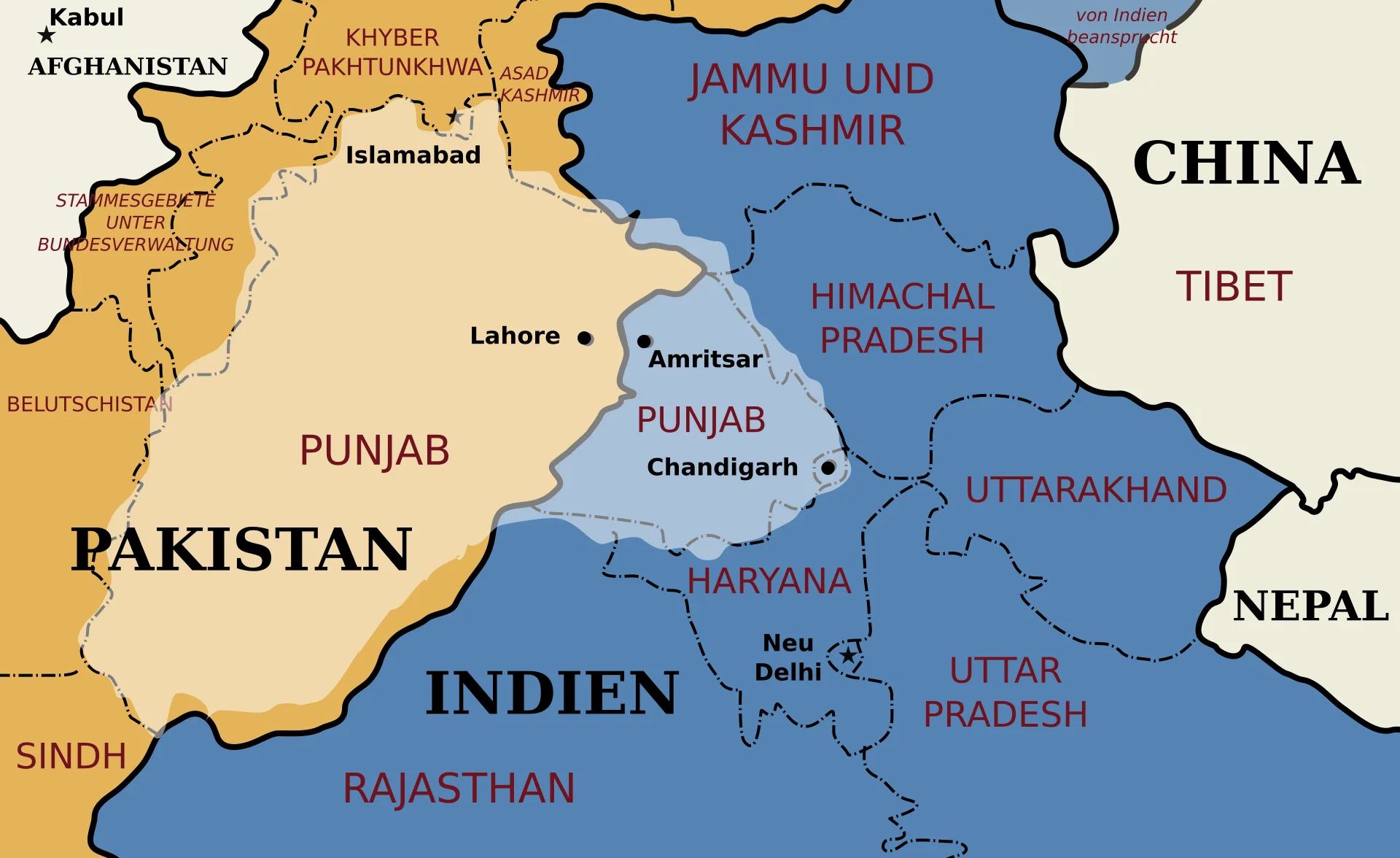
The land of five rivers is drowning again. Punjab, a region that has fed millions with its fertile plains for centuries, is today staring into waters that have swallowed villages, crops, and lives on both sides of the border. And here’s a striking truth often overlooked: The land where Christian communities are most densely settled in Punjab, including villages near Sialkot, Narowal, Lahore, Sheikhupura, Daska, Nankana Sahib, Sahiwal, Toba Tek Singh, Faisalabad, Vehari, Sambrial, Gujranwala, and Kasur, is entirely underwater. These families, who already lived on the margins of society, struggling against persecution and poverty, are now fighting the floodwaters too. Their churches, schools, and homes stand submerged, their voices drowned in silence.
From Lahore to Ludhiana, from Multan to Moga, the monsoon has turned into a plunderer. The floods of 2025 are not just another disaster; they are a mirror held up to a world reshaped by climate change.
The Toll in Human Lives:
In Pakistan’s Punjab, at least 66 lives have been lost, with more than 8,400 villages submerged. Entire Villages have been swept away, leaving families stranded on rooftops or huddled in overcrowded camps. Over 1 million acres of farmland, once heavy with basmati rice, now lie under muddy water.
Across the border in India’s Punjab, the toll is also grim: over 50 deaths reported and more than 1,400 villages under water. Fields stretching over 370,000 acres have been devastated. Farmers, already battered by debt and uncertain markets, now stand amid silt and ruin, murmuring the same bitter refrain: “Everything is gone.”
Houses, humble mud structures, and sturdy brick dwellings have crumbled or cracked under relentless torrents. Official counts of destroyed homes are still being compiled, but eyewitnesses speak of “entire Villages gone” and “streets where no door is left standing.”
Yes, heavy monsoons have always lashed Punjab. Flooding is not new. But the scale, the speed, and the severity of what we’re witnessing now, these are not just “acts of God.” Their acts are amplified by climate change.
Warmer air holds more moisture, which means heavier downpours when the skies finally open. Glacial melt from the Himalayas is feeding already swollen rivers. Extreme weather patterns once considered “once in a century” are now recurring every year.
Scientists have been warning for decades: South Asia is on the frontline of climate chaos.
Both Governments Failed:
Disaster management in Punjab has once again proven to be reactive instead of proactive. Embankments collapse, relief crawls late, and compensation trickles down in crumbs. Both the Indian and Pakistani governments have fumbled their response—failing the very people they are meant to serve.
In Indian Punjab, when the state machinery lagged, it was actors, singers, and ordinary citizens who stepped in first, delivering food, medicine, and essentials to flood victims while the administration played catch-up.
Across the border in Pakistan’s Punjab, the tragedy deepens into farce. Conditions are worse than anyone imagined. The Chief Minister has allegedly demanded that all relief be distributed with her own picture stamped across the packages, turning human suffering into political theater. NGOs, including ours, have been harassed, restricted, and even blocked by government departments while trying to deliver life-saving aid.
Both Punjab and its political divide share the same pain. Bureaucracy, corruption, and lack of climate-resilient infrastructure mean that floods are not just natural disasters; they are social failures. And when marginalized Christian communities are hit hardest, it exposes a deeper injustice: the vulnerable always bear the impact.
Adding to this heartbreak, many churches now stand underwater. The floods have swallowed small village chapels and century-old sanctuaries alike. Crosses that once stood as flares of faith are half-submerged, pews float like driftwood, and congregations are left without a place to gather or pray. For Christian communities already pushed to the margins, the flood has washed away not only their homes but also their sacred spaces.

What Should We Do?
This is a moment that demands more than sympathy; it requires action. We call on all who believe in justice and compassion to join us in standing with the Christian families of Punjab. They need food, medicine, shelter, and above all, the assurance that they are not abandoned in their hour of need. Together, we can be the bridge between despair and hope, between loss and survival.
It is not the first time this has happened. Time and again, during disasters, Christians have been left without meaningful support. Relief rarely reaches their doorsteps, and when it does, it comes laced with discrimination, bureaucracy, or political self-interest. In moments when solidarity should rise above divisions, they are too often pushed to the very edge, forgotten, unheard, and left to fend for themselves.




0 Comments